This Vaisakhi, stretch your giving through sustained care by becoming a monthly donor. Recurring gifts of safety ensures Sikh Family Center is better prepared to respond to time sensitive Helpline needs as and when they arise.
All donations toward our Urgent Action Fund will ensure survivors feel less stress about time sensitive needs that could compromise their safety and wellbeing.
Why Urgent Action?
The period during and immediately following separation from a partner causing abuse is when the risk of harm and/or retaliation is statistically the highest.
Research shows the risk of homicide increases by about 75% for victims of intimate partner violence after they leave the abusive partner. This is why immediate support during separation is critical. (Center for Relationship Abuse Awareness)
Sikh Family Center’s Urgent Action Fund allows us to respond in real time when safety needs such as transportation, housing costs, and temporary support for basic necessities (food/clothing) can not wait.
What do you Fund?
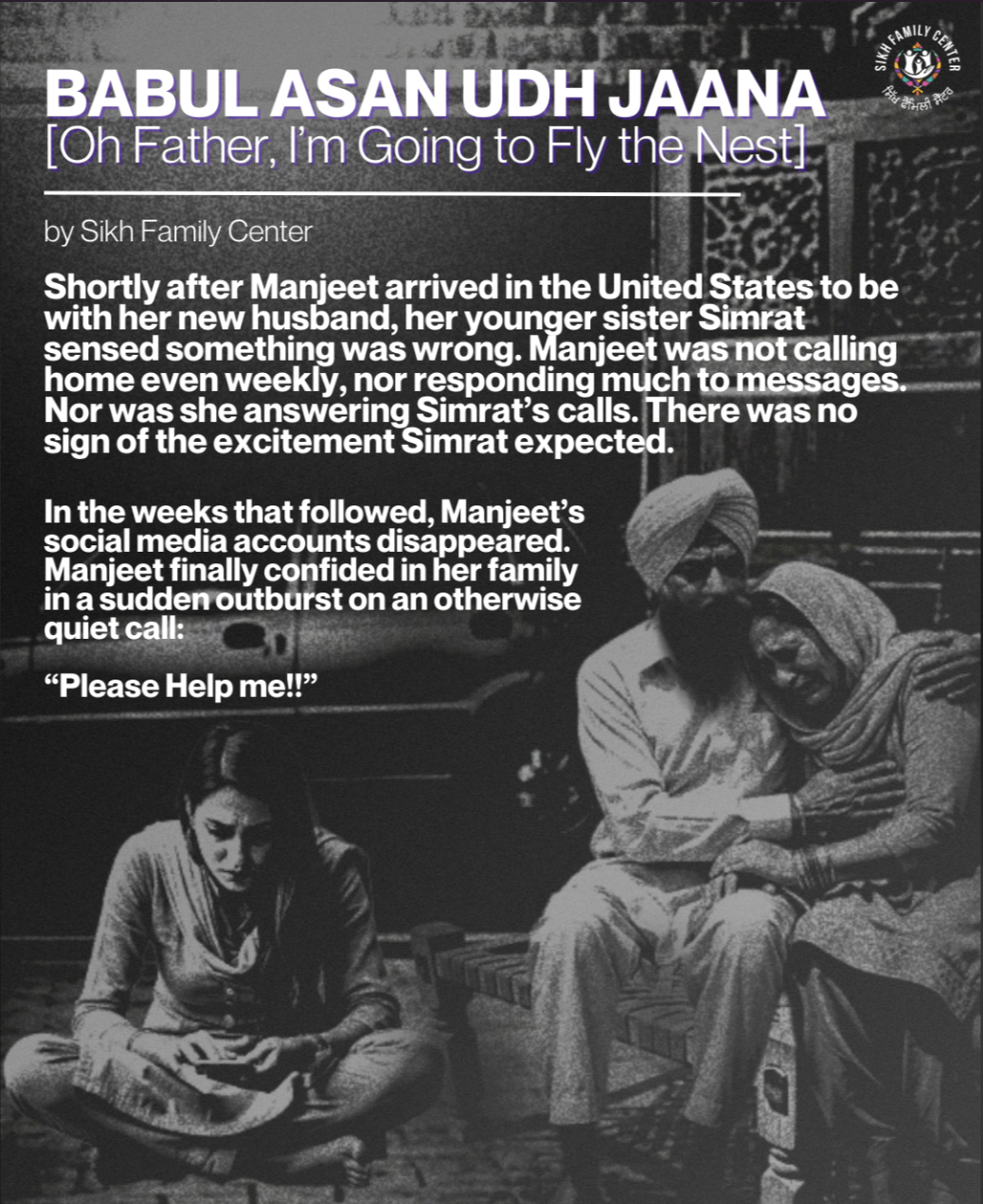
A survivor leaving and experiencing violence such as Manjeet Kaur in real-time may need:
- Temporary Motel stay and meals
- A safe phone to connect with emergency contacts
- Transportation to and from necessary appointments
- Legal filing fees related to court proceedings
- Gift cards to purchase essentials such as groceries and clothing
Your timely donation can prevent further harm and increase safety. For example, when a mother contacted our Helpline, she was unsure how to manage her home and care for her children while her husband was being detained. Our team worked alongside her to explore stable housing options, job opportunities, and connected her with a legal organization for clarity in her family’s circumstances.
Sikh Family Center’s Urgent Action Fund enabled us to meet this family’s immediate needs including groceries.
What types of calls has Sikh Family Center responded to in the first quarter of 2026?
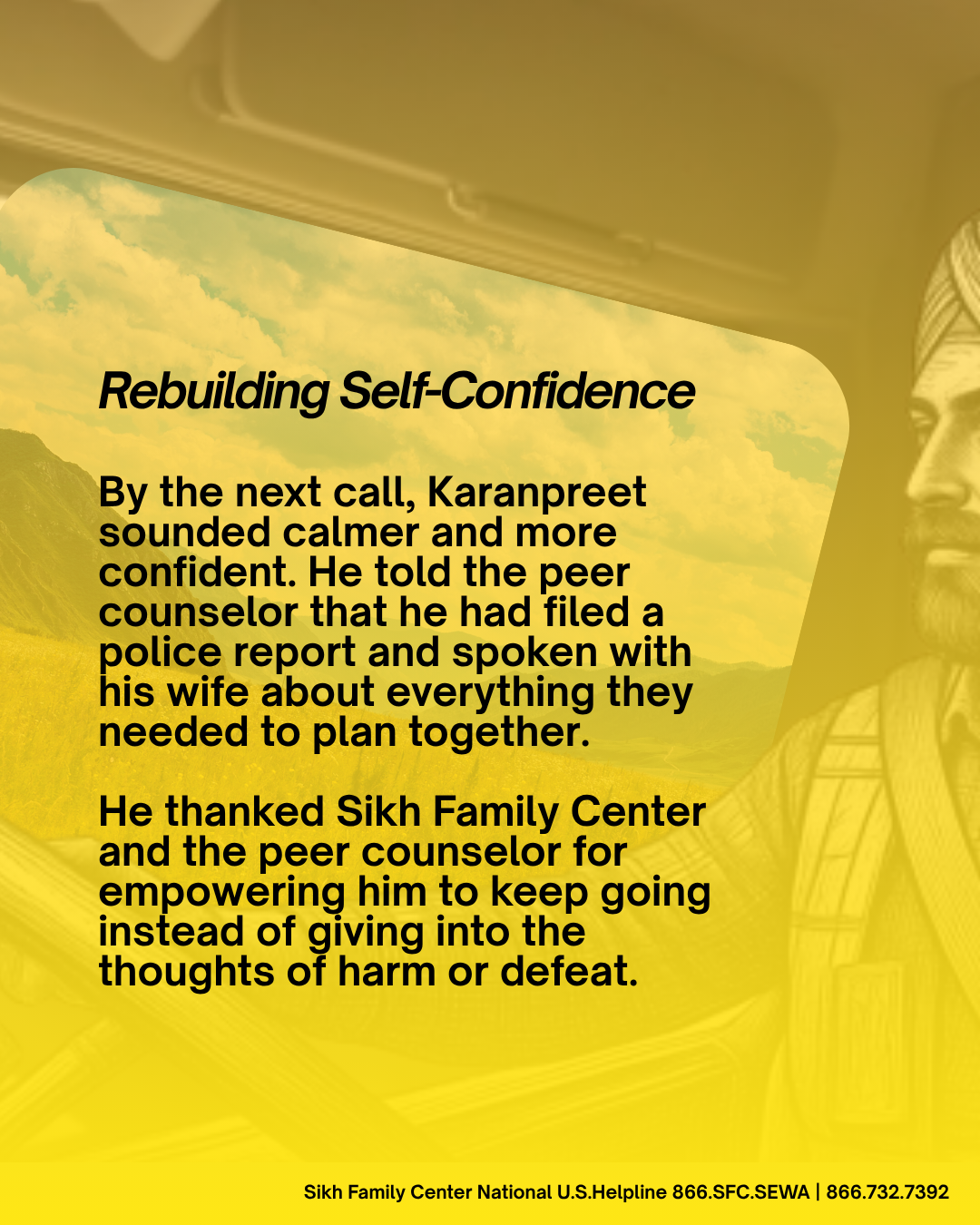
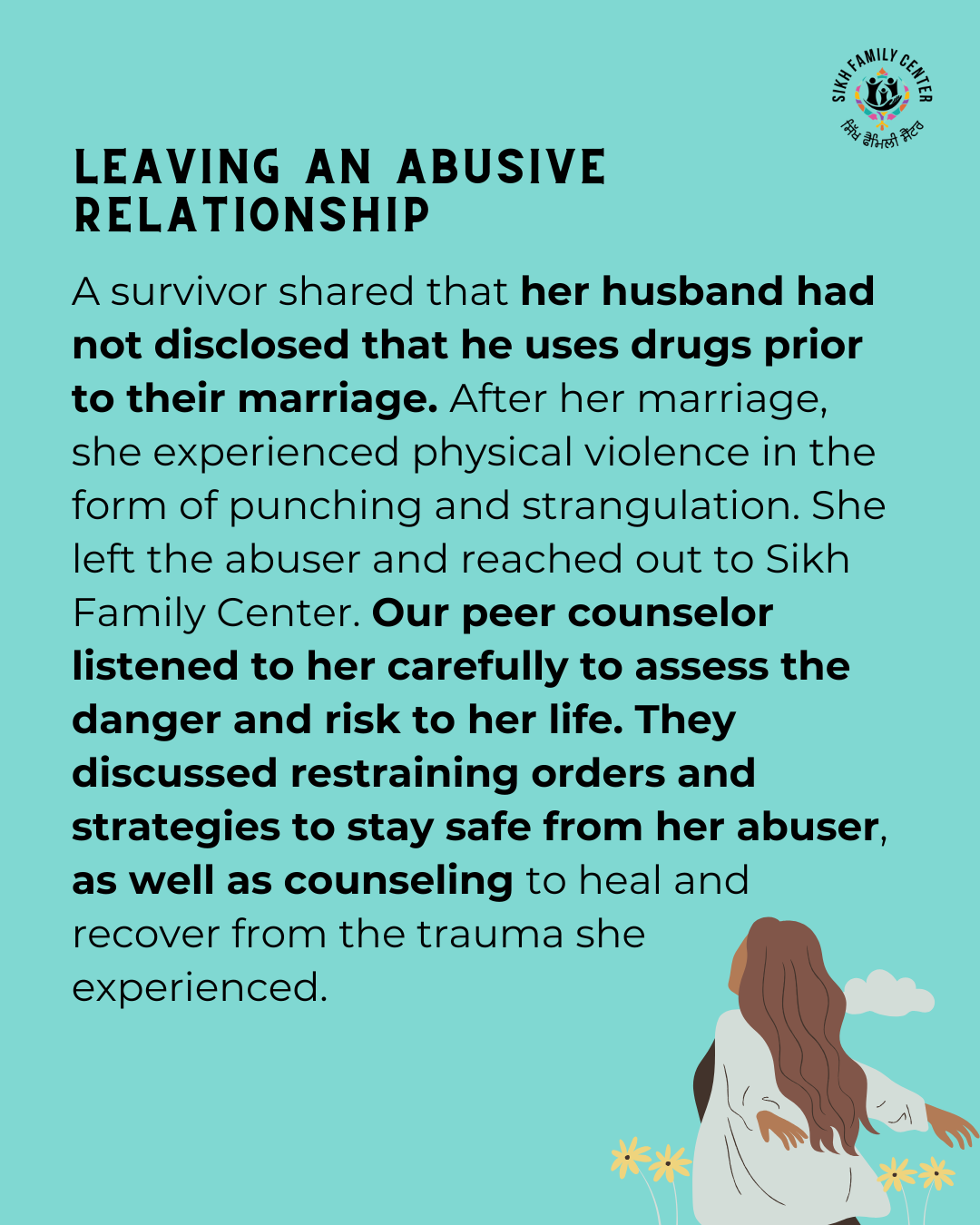
Post-Separation Safety. A survivor who left a violent home and was having active suicidal thoughts, received ongoing emotional support, connection to mental health resources (including 988), and collaborative safety planning with a trained peer counselor. Together they explored legal options such as benefits of a restraining order, physical, technological, and digital safety strategies, and ways to navigate community gossip that centered her safety and autonomy.
Supporting a Survivor Wrongly Accused of Violence. After enduring years of abuse, a survivor found herself wrongly accused by her abuser, leaving her feeling trapped and unheard. Our team shared information about the Battered Women's Justice Project, a national resource that provides assistance to help attorneys build a strong defense case that reflects the truth of the survivor's experience.
Preparing to Leave Safely. In collaboration with a partner agency in the Midwest, our team worked with a survivor as she prepared for the possibility of leaving an unsafe home. Together, we created a plan that included when to call 911 and how to request a domestic violence advocate to be present when the police arrive - steps that help protect her safety and ensure she is heard in a stressful situation.
Helping a Family Rebuild Safety. After leaving an abusive household, family members faced a new threat - their safety at work. The perpetrators of abuse knew where the survivors were employed and were attempting to contact them at work. When they turned to Sikh Family Center for guidance, our trained peer counselors explained how restraining orders extend protection to their workplaces as well, and could be an important tool as they rebuild their peace and security.
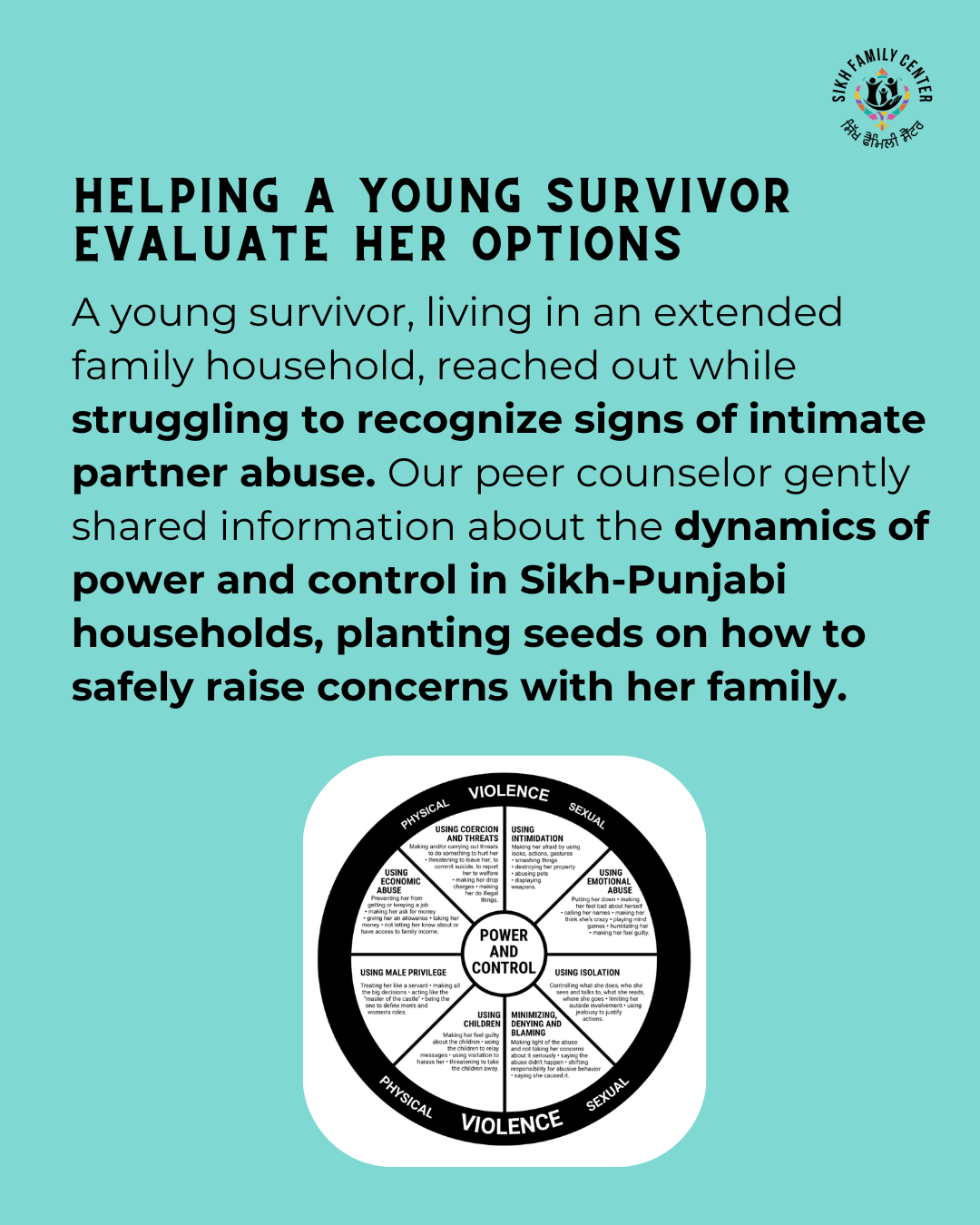
Our trained, bilingual community volunteers (known as peer counselors) work alongside survivors, providing trauma-centered, culturally responsive, compassionate support over several months, working to address the complex, intersecting needs that arise on their journey to healing. Peer counselors also connect survivors with appropriate resources as survivors reclaim and rebuild their lives.
These urgent needs reflect the importance of flexible, responsive funding to provide survivor-centered and culturally tailored services.
Together, we can envision a future where every family thrives in peace, love and equality.